Every Dead-End Project Started with a Site That Looked Good on Paper.

A pre-option assessment by BESS specialists who evaluate the parcel, call the AHJ, and deliver a verdict before you commit capital.

Specific to BESS. Built by Humans.

Desktop screening tools can tell you what a database contains. They cannot tell you what the zoning administrator thinks about battery storage, whether the fire marshal will accept the manufacturer’s test data, or how the three commissioners who vote on your land use permit have handled energy projects in the past.

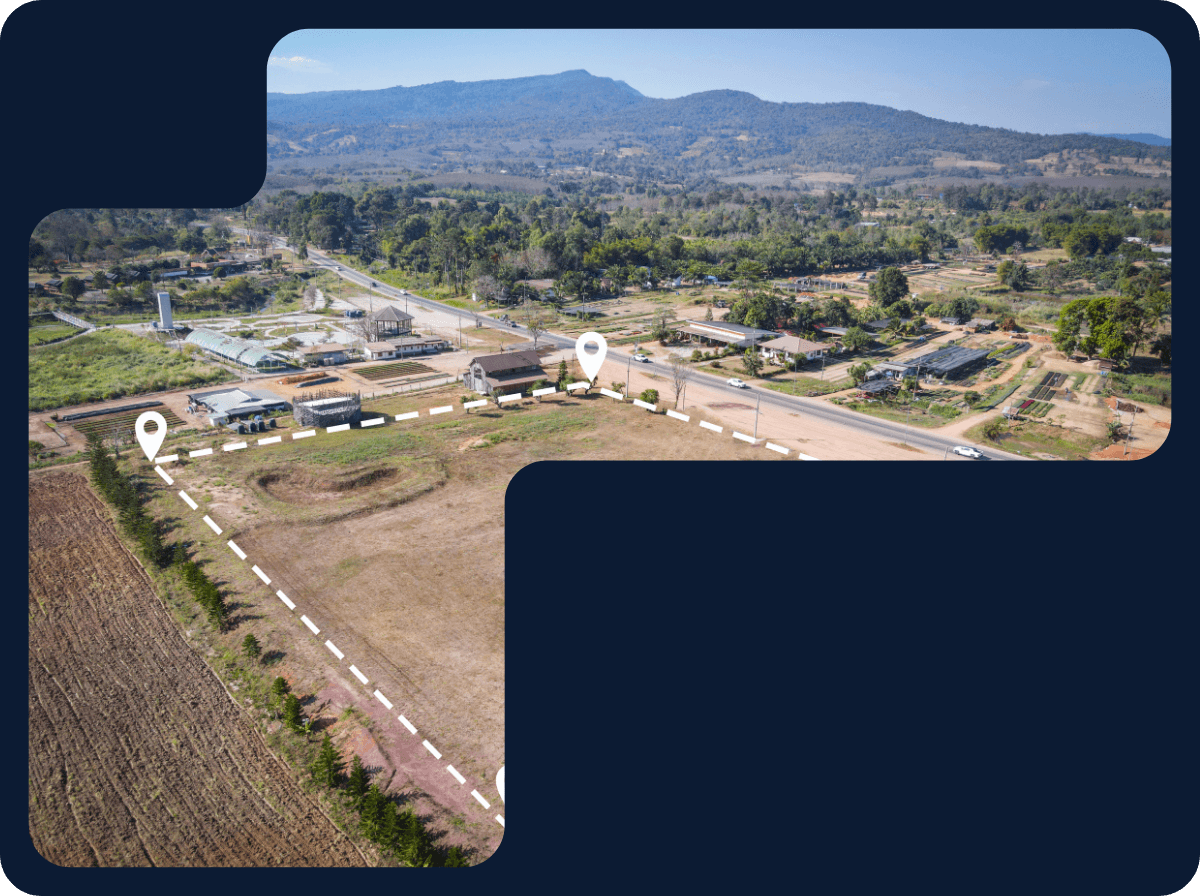
Carina’s Site Diligence answers those questions. It is a structured, parcel-specific assessment conducted by a team of BESS permitting specialists who evaluate the site across six areas, from civil engineering and drainage to fire protection regulation and community sentiment. Each assessment is tuned to a specific parcel, a specific capacity, a specific equipment SKU, and the specific zoning overlay that governs the site.

The result is not a data export. It is a verdict: feasible, conditionally feasible, or not feasible, supported by a full-length report, a structured permitting matrix, and a development roadmap that tells you exactly what comes next if the project advances.
The Verdict

Feasible

Conditionally feasible

Not feasible

Delivered with a full-length report, a structured permitting matrix, and a development roadmap.

Six Areas We Evaluate

Every assessment covers six areas. The depth on each one scales to the site: some parcels surface flags in fire protection that drive the entire engagement; others pivot on a single wetland delineation or an interconnection constraint. We go where the risk is.
1

Civil Feasibility and Site Engineering

We evaluate whether the parcel can physically support the target configuration. Topography, drainage, soil conditions, groundwater, flood exposure, and access geometry all factor in. Where drainage is complex or shared with adjacent properties, we assess the stormwater compliance path at a feasibility level to identify deal-breaking constraints early.

Buildable area is modeled for the specific equipment the developer intends to deploy. A parcel that appears adequate at face value may fall short once fire separation distances, setbacks, stormwater infrastructure, and future augmentation reserve are subtracted. When multiple configurations within a parcel are viable, we compare them and recommend a preferred option.

2

Fire Protection Regulation

Fire protection is the single most common source of unexpected permitting friction on BESS projects. We treat it as a jurisdiction in its own right: our permitting matrix dedicates a full tab to fire code, and our report dedicates a full section to it.
We identify the applicable fire code stack, the BESS-specific provisions in effect, and the posture of every fire authority with jurisdiction over the site, including the responding fire district’s operational profile and any prior experience with battery storage. Fire-driven separation distances feed directly into the civil buildable area model and often determine whether a parcel of a given size can accommodate the target capacity.
3

Local Permitting and Constructability

This is where the human interaction matters most. We build the local permitting picture through direct outreach to the Authorities Having Jurisdiction, confirming applicable permits, setbacks, review pathways, and any BESS-specific provisions or interpretation risks.
The output is a structured permitting matrix covering zoning and use definitions, dimensional and performance standards, and every required local permit with its review type, timeline, and ordinance basis. We also document construction-phase restrictions that affect schedule and cost, from noise limits and seasonal clearing windows to fire apparatus access standards and coordination requirements with adjacent properties.
Where a jurisdiction has adopted BESS-specific zoning, we confirm the current code status. Where the code is silent on battery storage, we flag the interpretation risk.
4

State and Federal Permits

We identify every state and federal permit triggered by the project and map the dependency chain, flagging where one permit gates another and where a single technical determination can resolve multiple downstream triggers at once.
State permit sets vary significantly by jurisdiction and include environmental review frameworks, cultural resources consultation, habitat and species coordination, stormwater construction permits, hauling permits, and electrical permitting. Where state-level siting board pathways exist (EFSEC, Article 10, OPSB, and equivalents), we advise on whether opting in or staying on the local-led path is the better strategy.
Federal permits cascade. We identify whether that cascade applies to the site and what it means for the schedule if it does. The objective at this stage is to surface any federal trigger that could materially extend the permitting timeline, not to prepare the federal applications themselves.

5

Interconnection and Grid Access

We evaluate the physical path from the site to the point of interconnection: distance, obstacles in the way, substation configuration, and any known capacity or queue constraints. The focus is on identifying fatal crossing constraints or infrastructure gaps that make the interconnection route impractical, not on performing an interconnection study.
6

Stakeholders Map and Community Sentiment

We identify the officials, boards, and agencies with authority over the project’s entitlement and research how they have handled energy and land use decisions in the past.
We use a custom-trained AI model to scan and map organized opposition and support networks across government meeting records, local media, social media, and regulatory filings. A human analyst validates every finding before it enters the report. The output is a stakeholders map with profiled decision-makers, a community sentiment assessment, and a precedent analysis of comparable projects in the jurisdiction. Where opposition risk or hearing dynamics warrant enhanced diligence, we conduct background research on key officials and deliver linked reference materials.

Process and Timeline

The base assessment is executed by a team of three specialists: a civil engineer, a zoning and permitting specialist (a former city planner), and a senior developer (a managing director), with additional specialists (battery engineering, fire protection, interconnection, stakeholder engagement) engaged as the screening surfaces flags in those domains.
Timeline

3 to 4 weeks

Typical engagement runs 3 to 4 weeks from data receipt to final report delivery, depending on AHJ responsiveness and the complexity of the jurisdiction’s permitting environment.
Cost

$2,500 per site

$2,000 for clients. A fraction of the cost of a post-option Critical Issues Assessment, and orders of magnitude less than the capital at risk if a site proves unbuildable after the option is signed.
What we need from you
Parcel identification (address, parcel ID, or boundary file), target capacity (MW and MWh at the point of interconnection), anticipated equipment (specific BESS SKU) if known, and the interconnection point. We access your data room, review any existing diligence, and build on what you already have rather than duplicating work you have already completed.

Who This Is For

Built for Developers and Capital Partners Making Pre-Option Decisions

Developers evaluating land options

You have a site under consideration and need to know whether it is worth signing the option. The Site Diligence gives you the technical, regulatory, and political basis for that decision before you commit capital. For developers building a portfolio, we evaluate multiple sites in parallel and deliver comparative assessments.

Infrastructure funds and capital partners
You are evaluating a BESS development portfolio or a platform acquisition and need to understand the permitting risk profile of the sites in the pipeline. The Site Diligence provides the same depth you would expect from a Critical Issues Assessment by a national engineering firm, delivered pre-option, at a fraction of the cost, with a verdict calibrated to the go/no-go decision you are actually making.
Data center developers evaluating BESS co-location
You are evaluating whether a battery storage system can be sited, permitted, and operated on or adjacent to a data center campus. We evaluate the siting and technical factors specific to data center adjacency: smoke and gas dispersion relative to HVAC intakes, fire suppression system interaction, UL 9540A setback application against the data center building envelope, EMI, and acoustic compliance, alongside the standard six-area assessment.
Sample Report

See the report structure and the permitting matrix

A redacted assessment showing the full-length report, the permitting matrix with its dedicated fire code tab, and the development roadmap.

Tier 1 BESS Expertise

We bring the operating rigor of global energy leaders to your project. Methods forged by deploying gigawatts, not just megawatts.

The Carina Rules

READ OUR INSIGHTS

Close The Execution Gap

Partner with Carina to bring discipline and technical rigor to your development pipeline
BESS Permitting Intelligence Delivered to Your Inbox
FEOC compliance, OEM moves, moratoriums, tariff developments, and other updates
Name(Required)
No spam. Only actionable insights.

READ BY HUNDREDS OF BESS PLAYERS